DRIFT & FLOW



[ November 1, 2025 ]
Drift and Flow: Technical Stuff
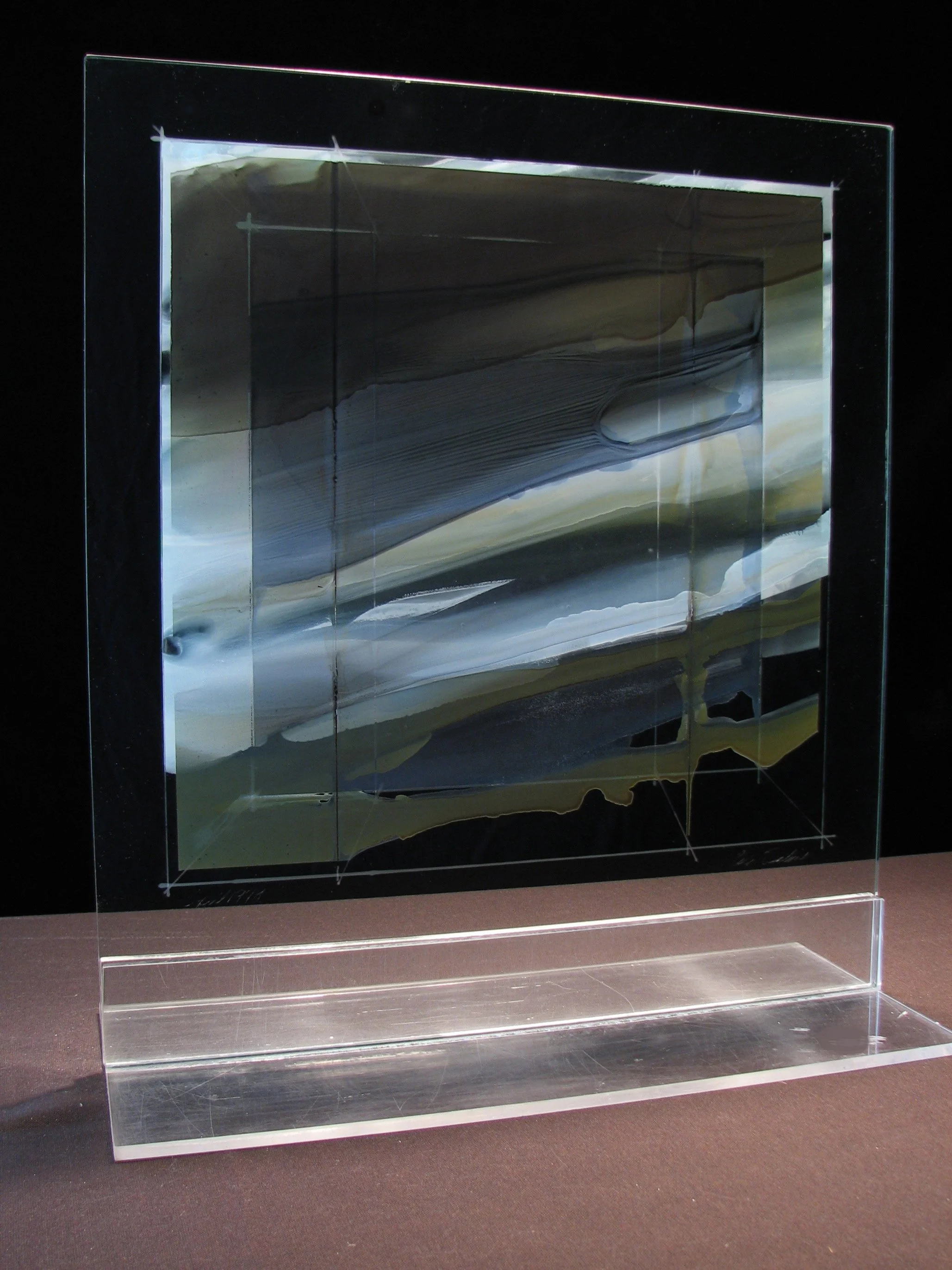
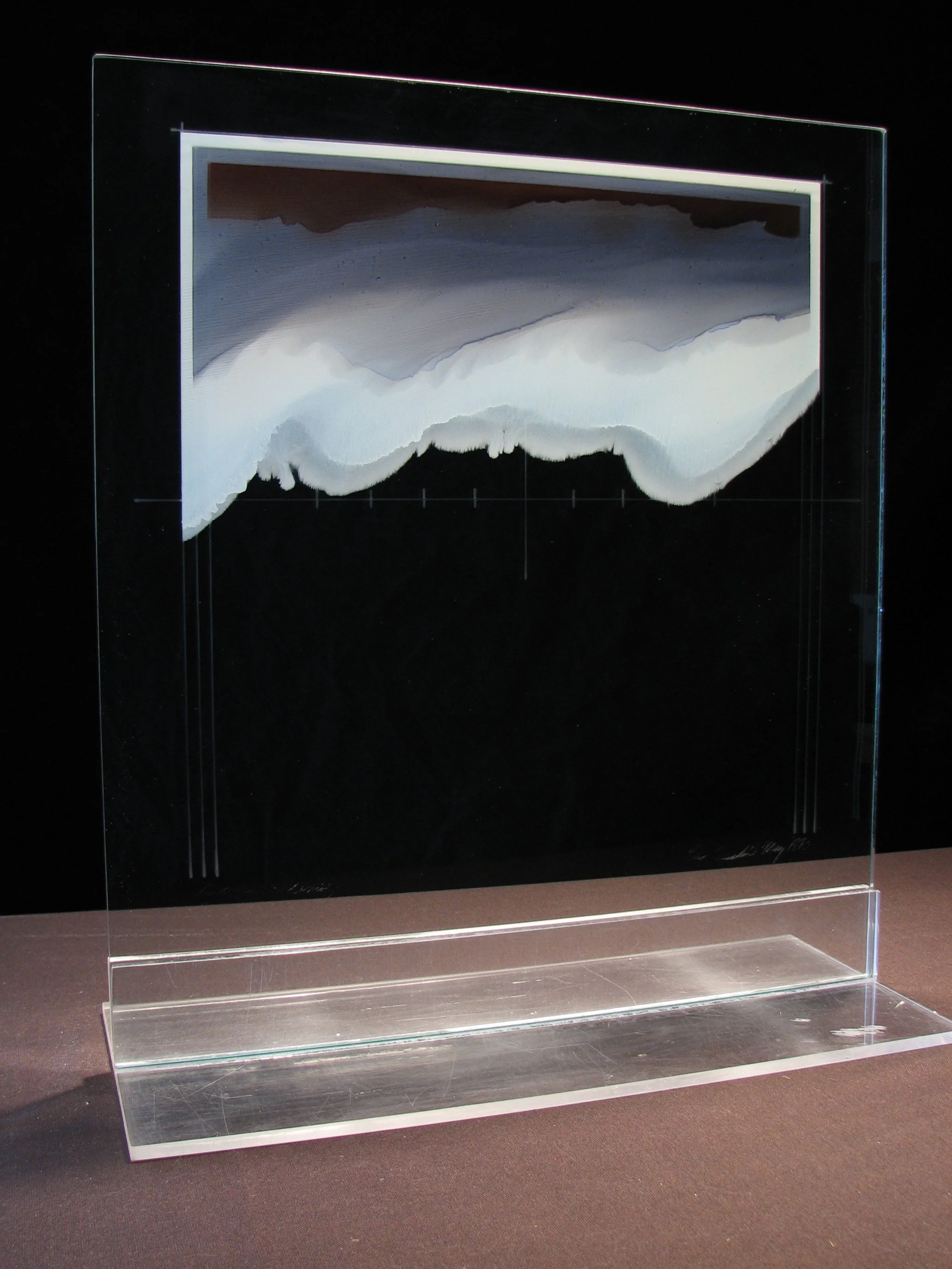
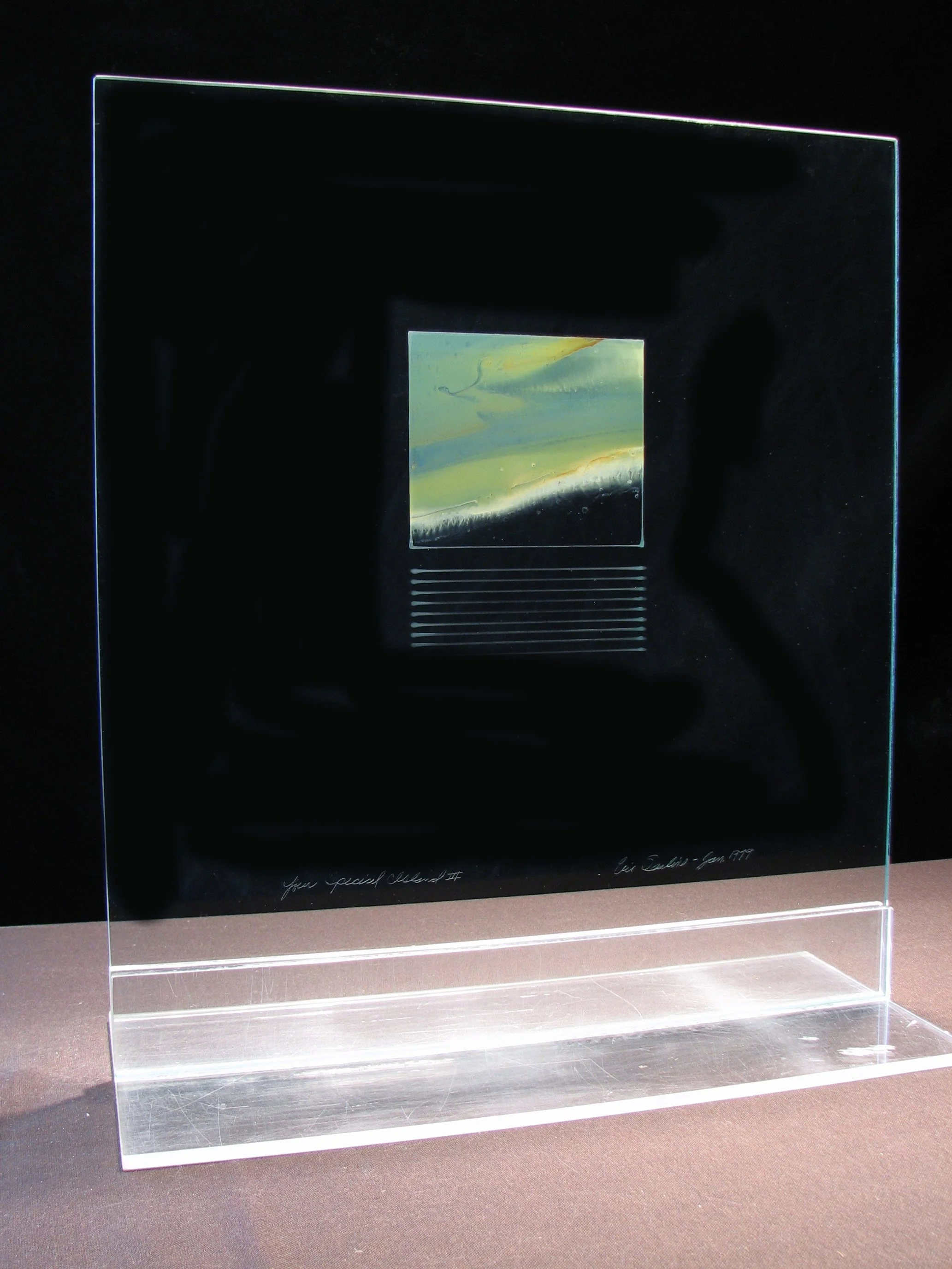
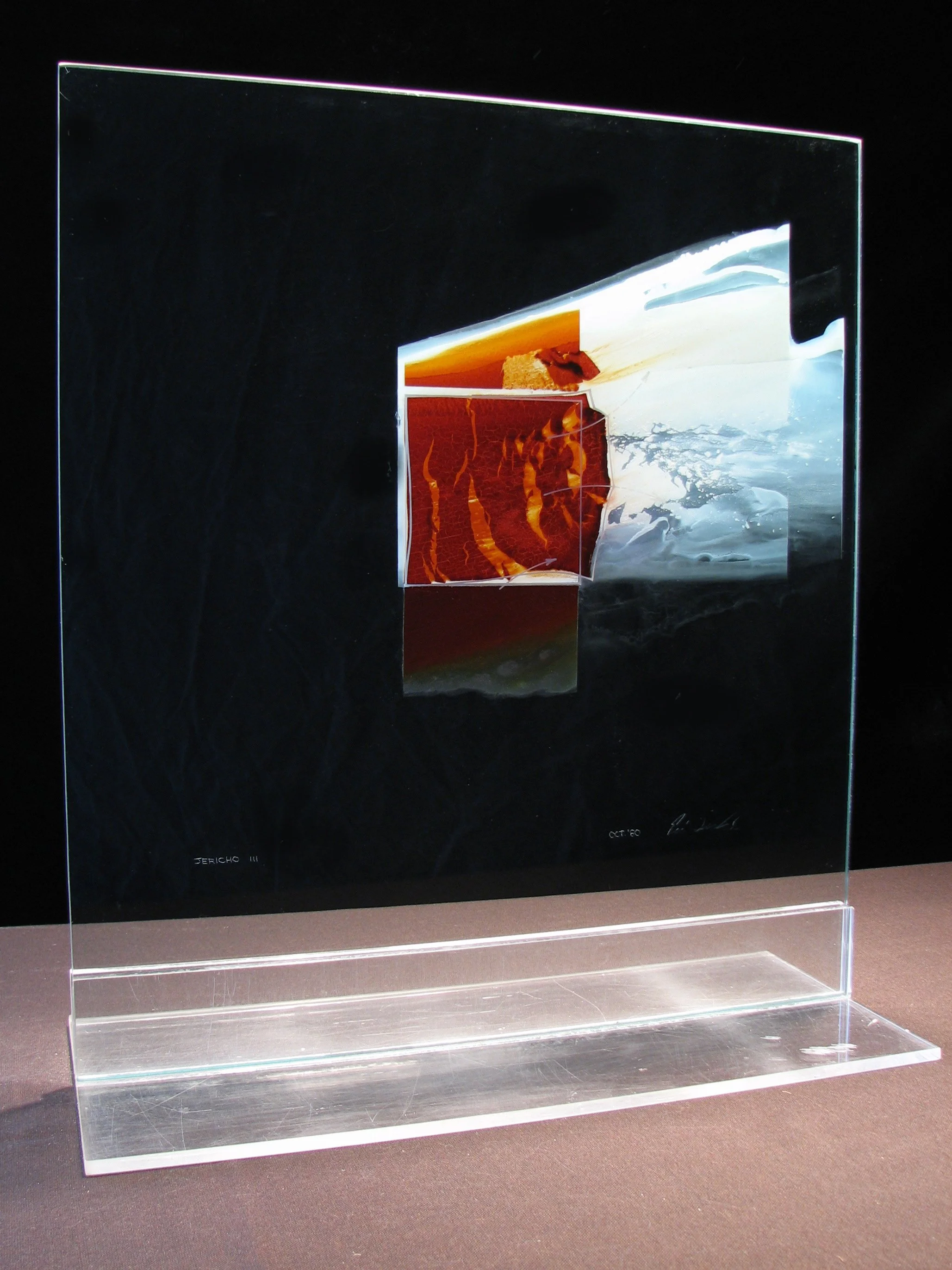
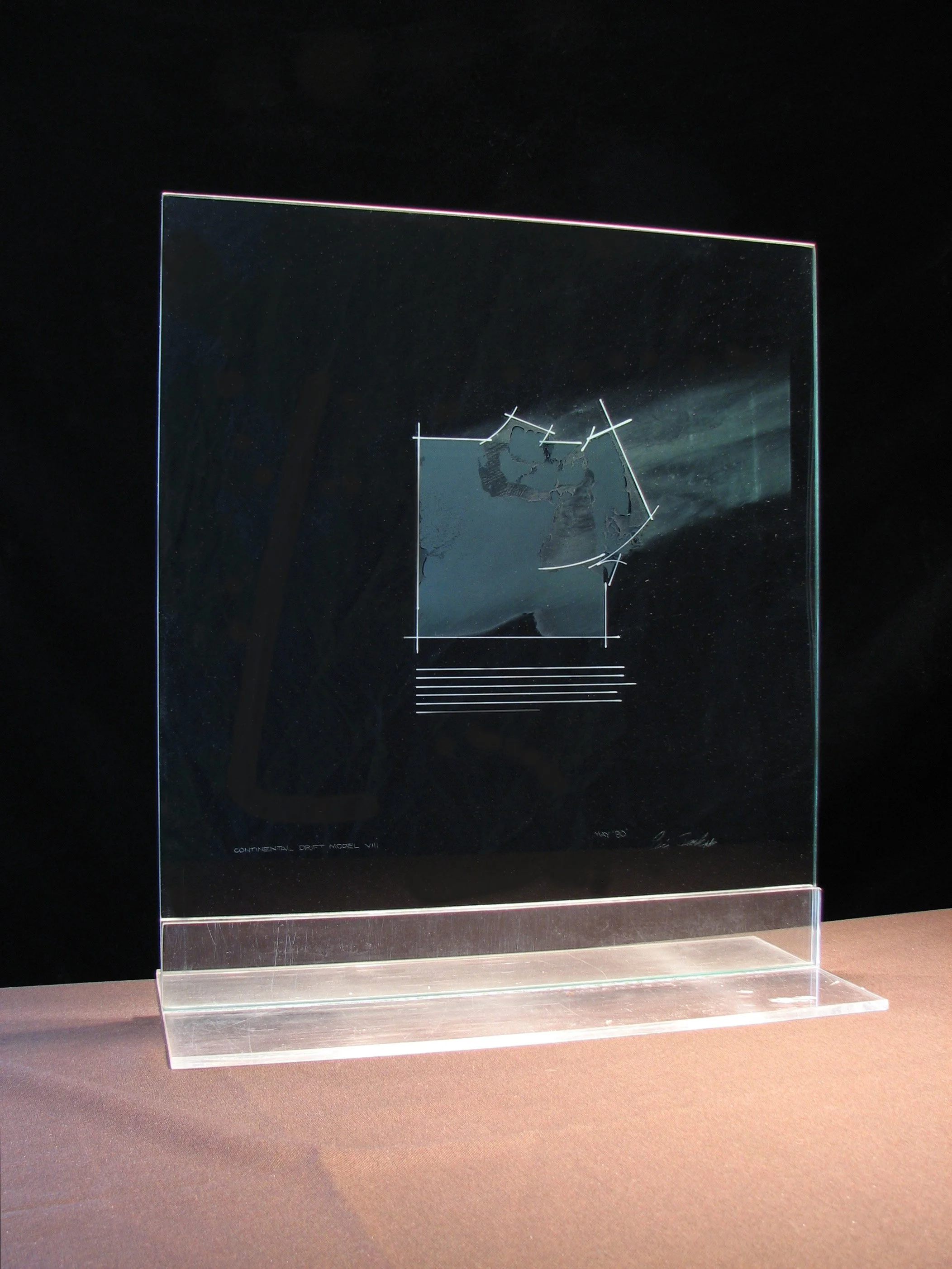
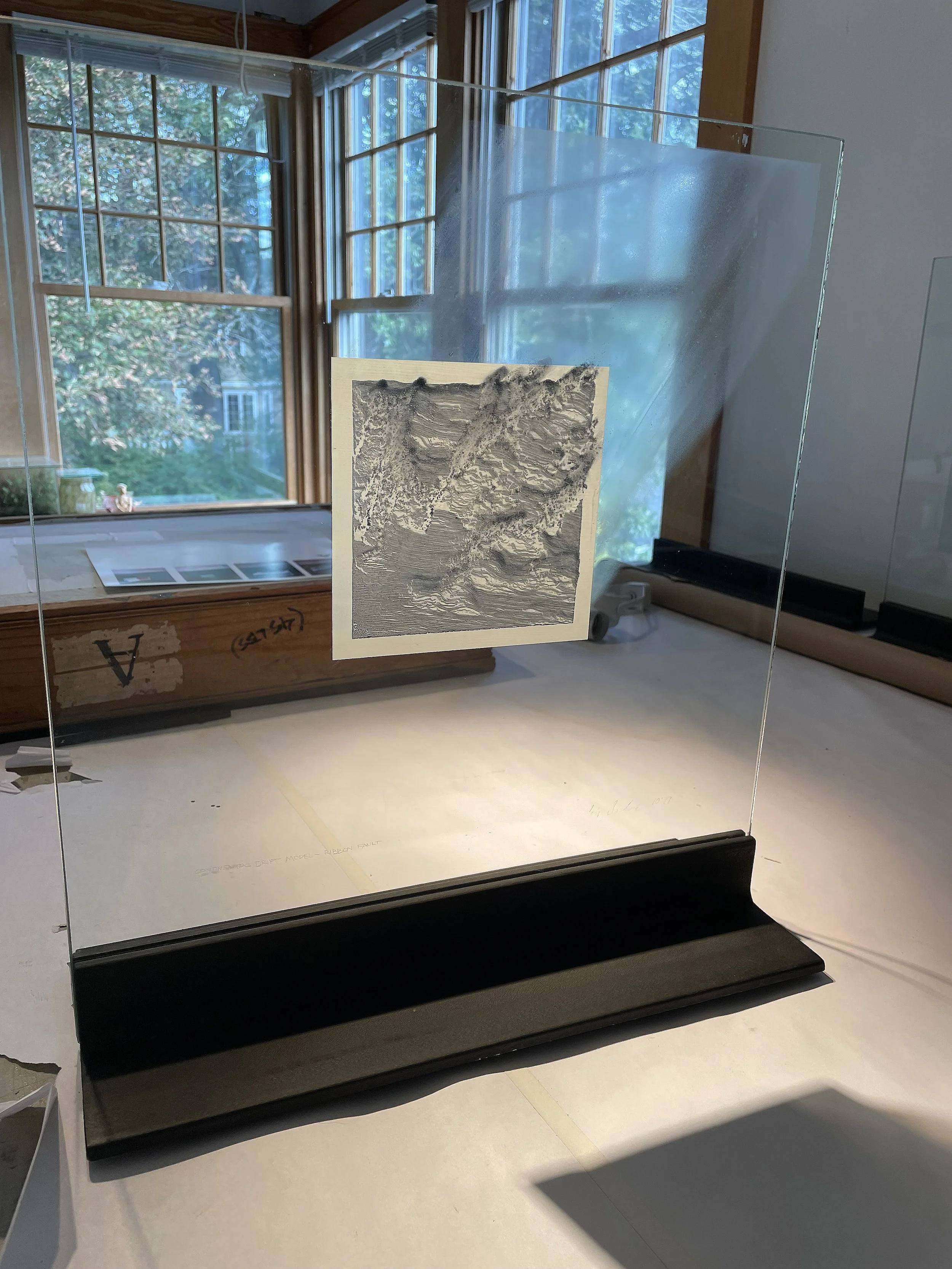
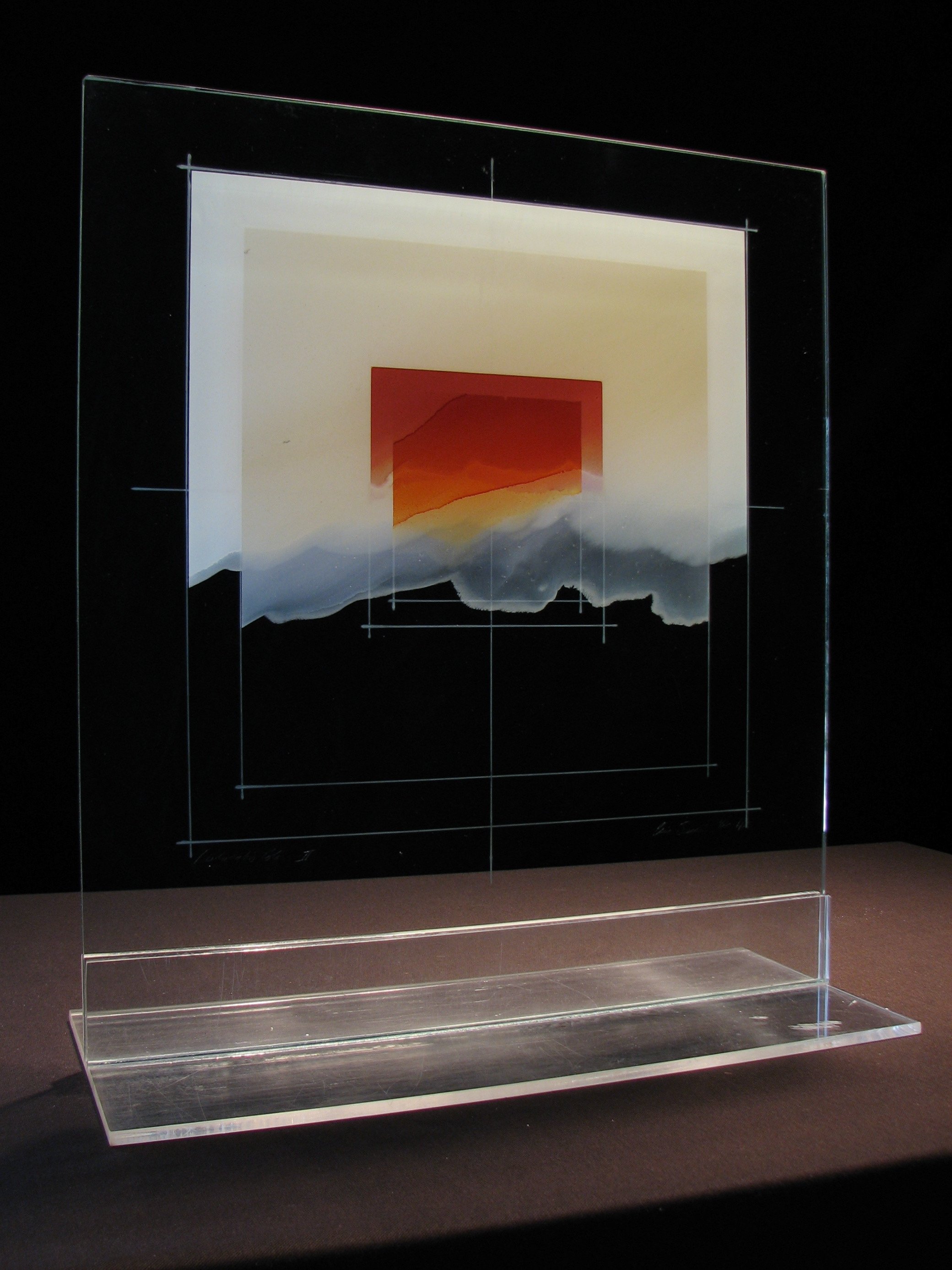
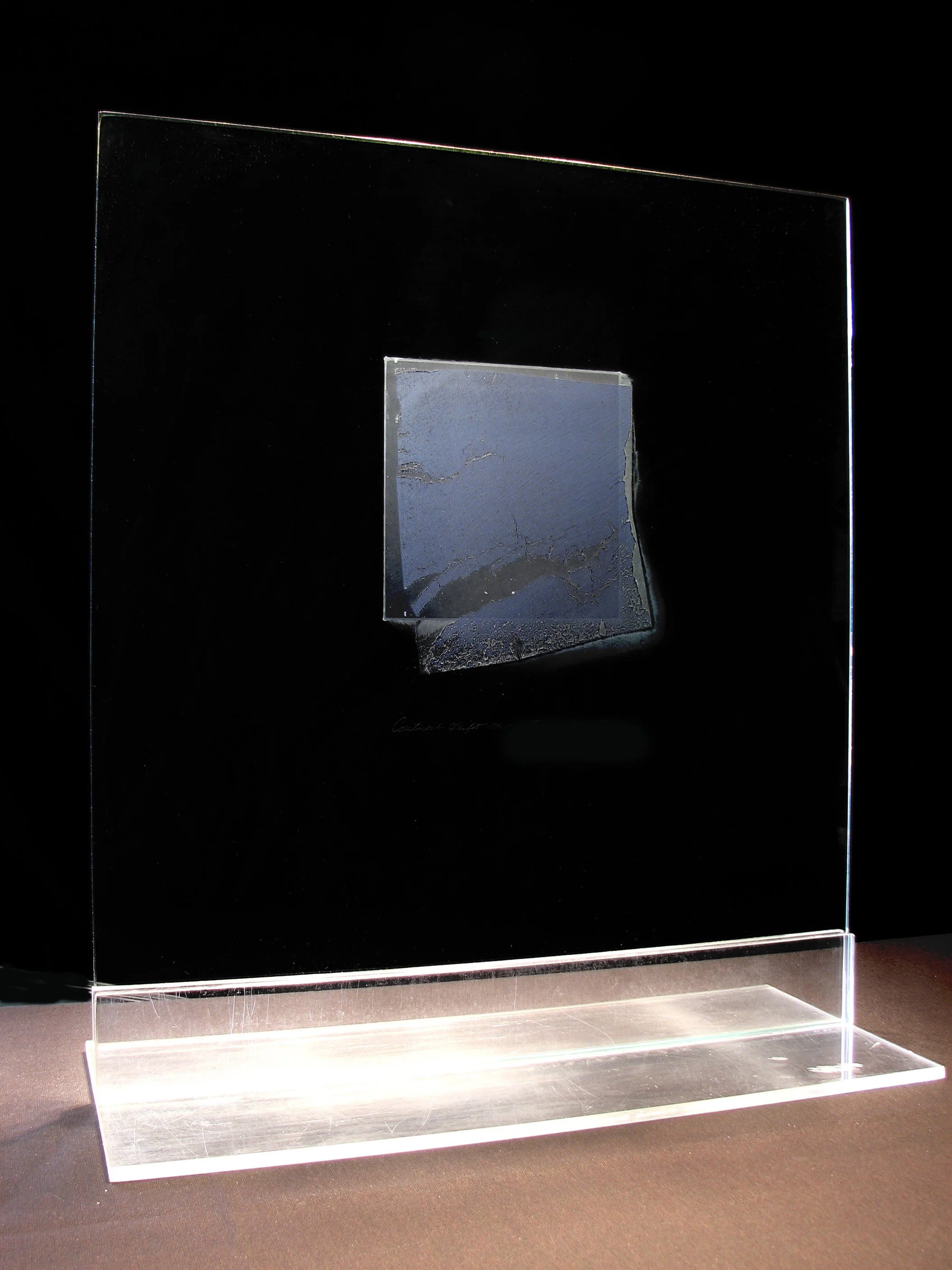
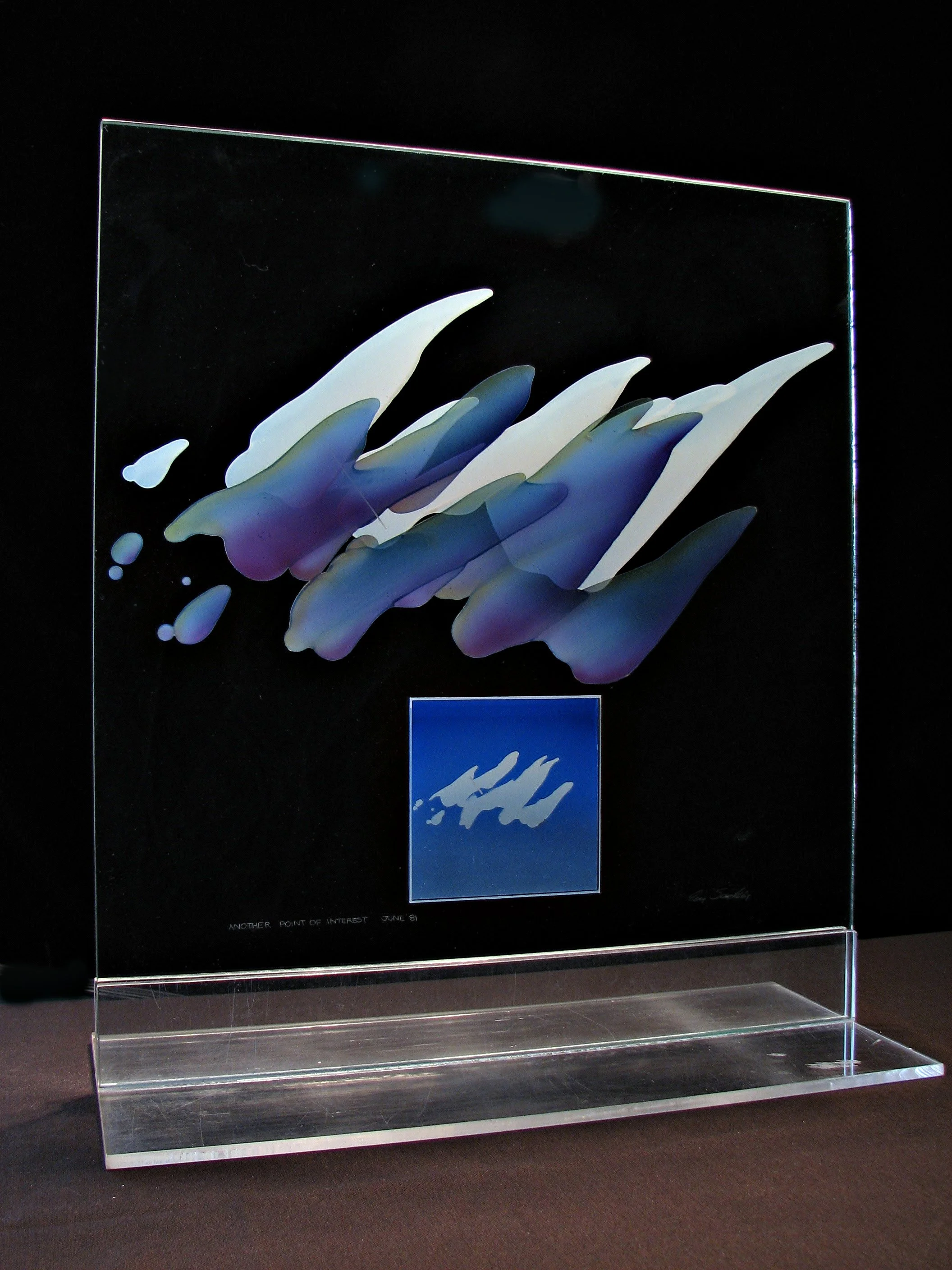
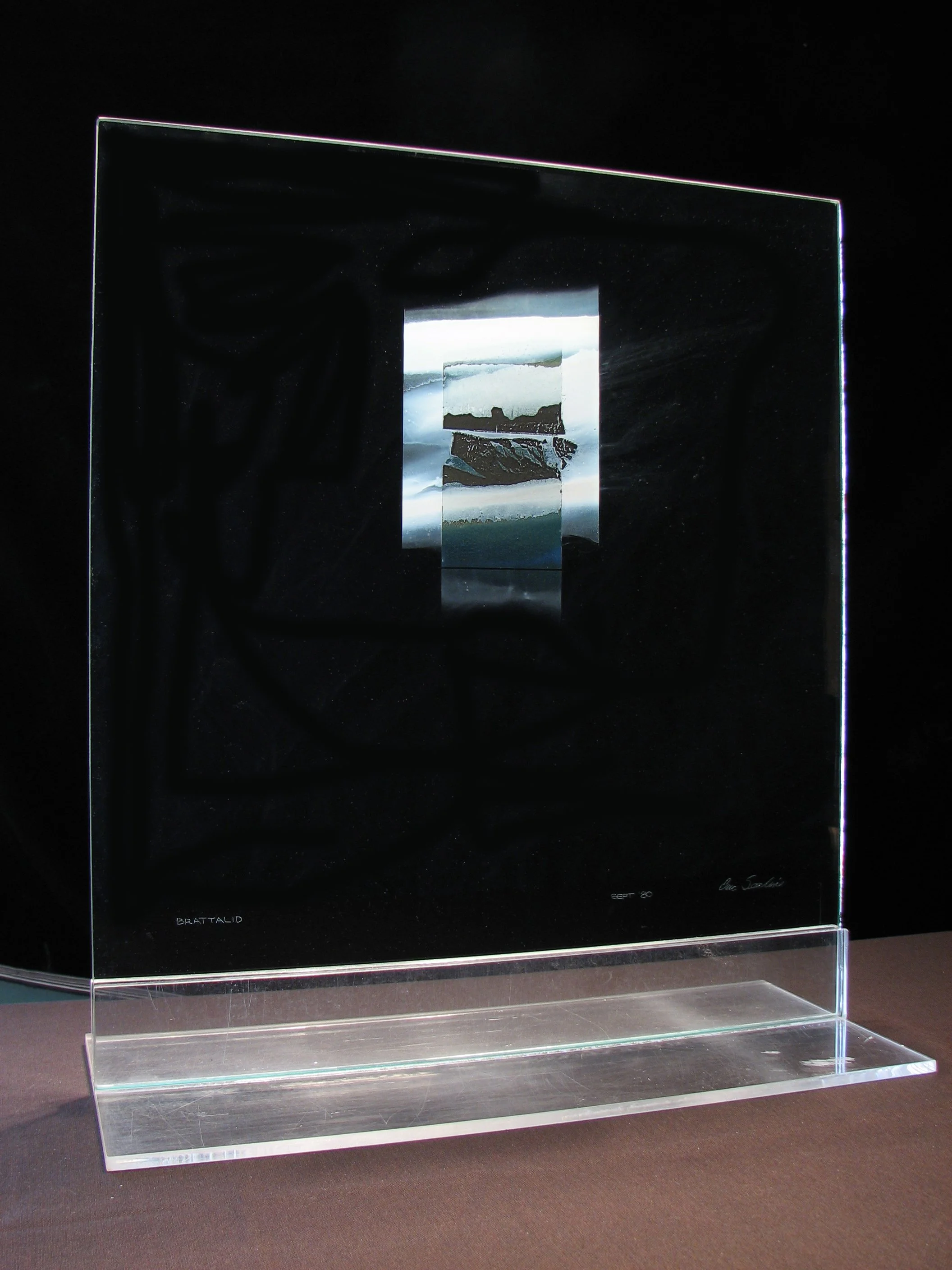
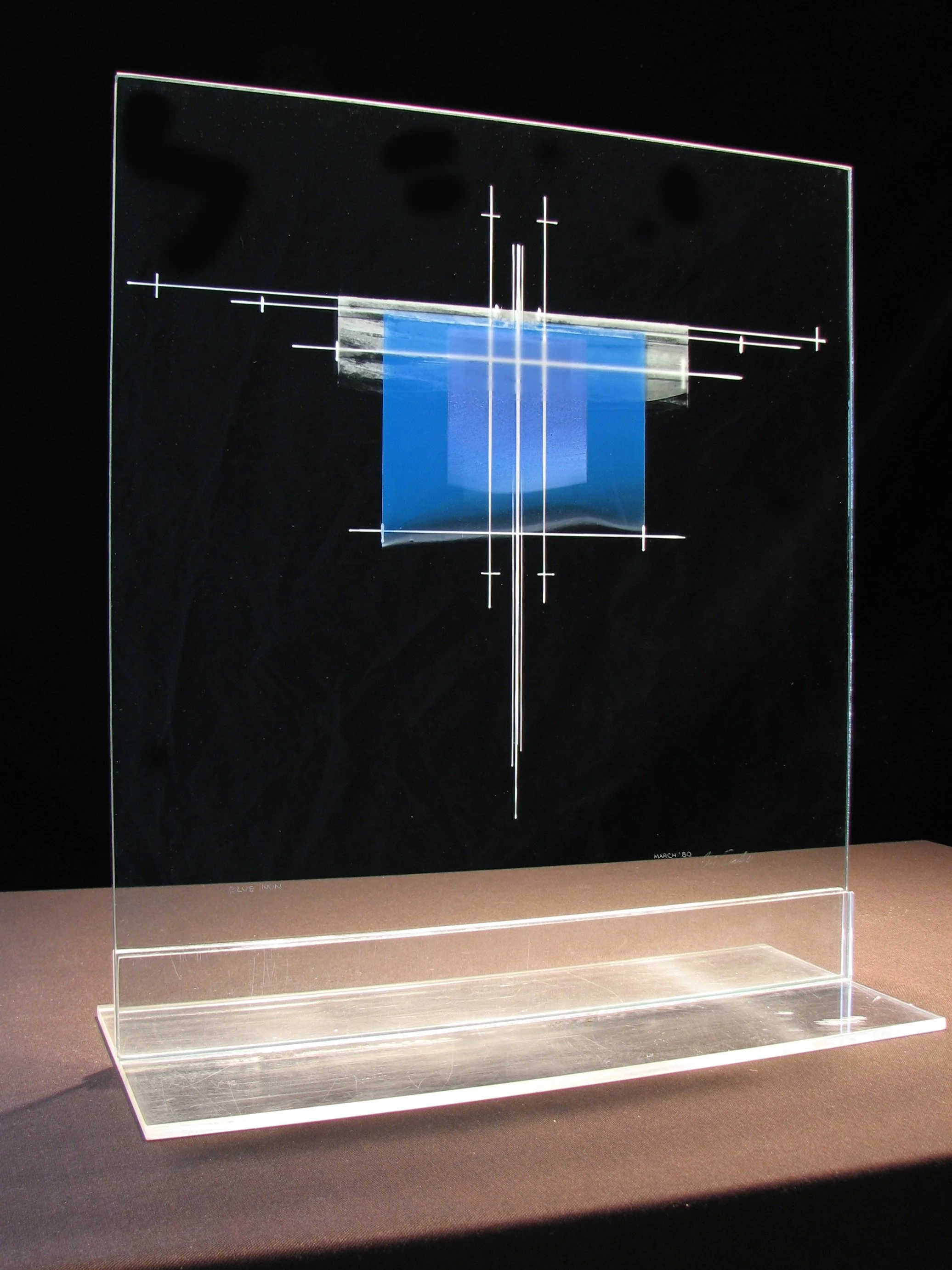
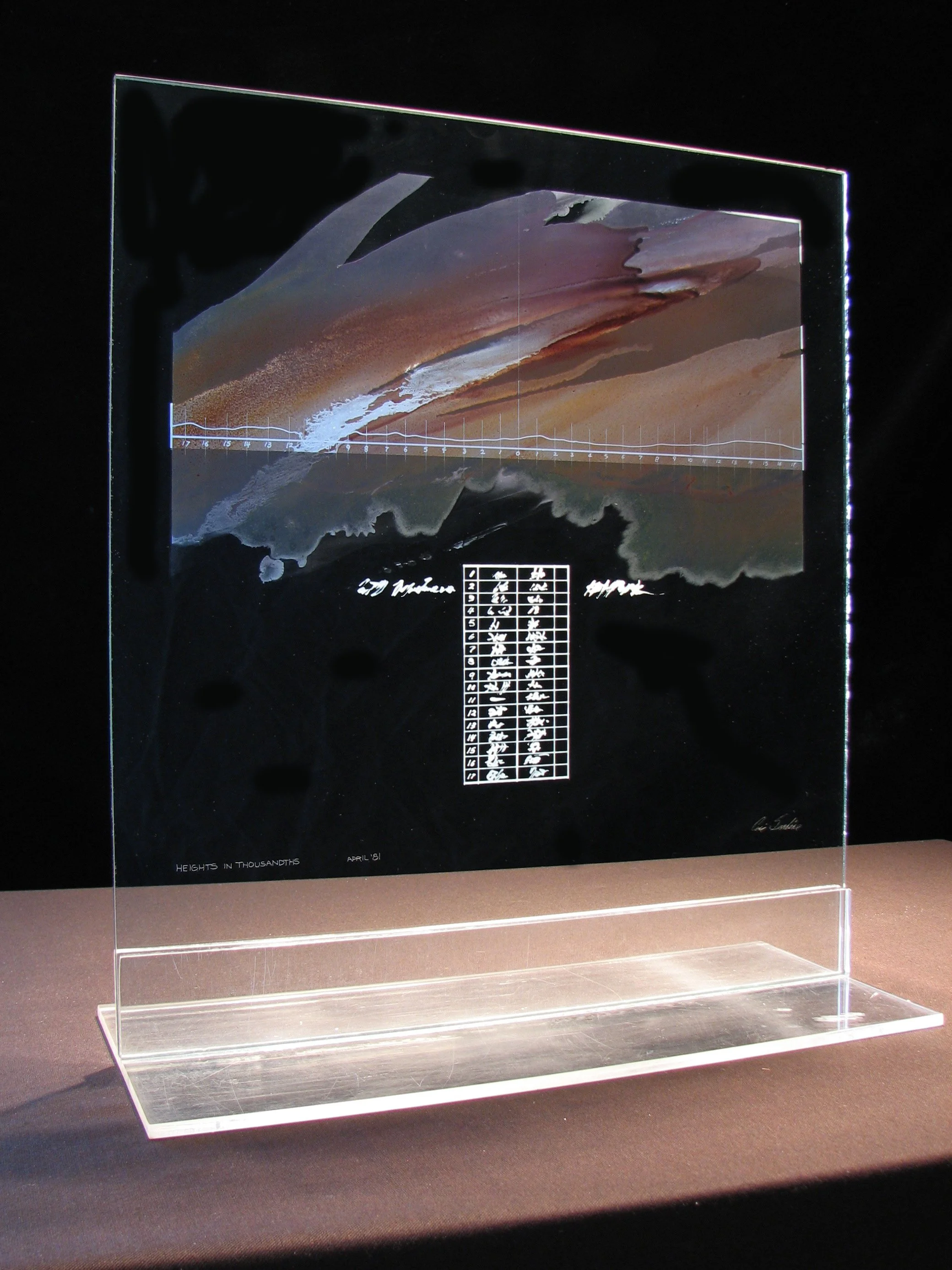
The pieces in this show are made of glass. The “paint” is a frit, a low-melting-point, very finely ground, very densely colored, and absolutely color-stable glass, fired at about 1,100°F in a small furnace designed and built by me. This process was made possible by the kind and patient help of Dr. David Martin, John Rundle, and the others working at Iowa State University’s Ceramic Engineering facility at ISU in Ames, Iowa, from 1975 to 1978.
These pieces are small. The original furnace was built to fire a sheet of glass 6’x7’ x 1/4", which is now displayed at Iowa State University’s Theilen Student Health Center.
The tricky part of working with these materials is that while the glazes “melt" at about 1100°F, the plate glass “field" begins to move just fast enough that it falls within a human time frame. Glass is always a liquid, but the movement at our temperature is so slow that we can’t perceive it. At firing temperature, the plate glass relaxes enough that it can move, however slightly. It also expands, as most things do when heated. Think of cold taffy and warm taffy.
This means that the plate glass has to be taken back to room temperature, with the furnace and glass temperature uniform across the entire sheet of glass, as the temperature is taken down, a bit at a time.
If this is not done, the perimeter area of the sheet, cooling faster, goes through this annealing temperature zone before the middle, and stops moving, meaning that the middle then cools more slowly, meaning it shrinks more than the perimeter, which builds in tremendous tension.
Not good.
It turned our first sheet of glass into potentially a very dangerous object. It bent into a three-dimensional curve. We moved it, carefully, across the shop and threw hammers at it until it shattered.
The second one is still there, and barring accident, will outlast everything around it.
The pieces themselves (I believe) mimic the processes that shape beaches the way they are, and continents drift in the ways they do. The processes are, at the same time, random and orderly.
[ September 13, 2025 ]
Drift & Flow
Here are my guesses:
Nothing at the planetary scale can be understood as a solid. That’s why planets are round and not angular. Gravity is stronger than rock, at this scale.
The continents are very thin, made of lighter rocks, floating on the heavier mantle rocks.
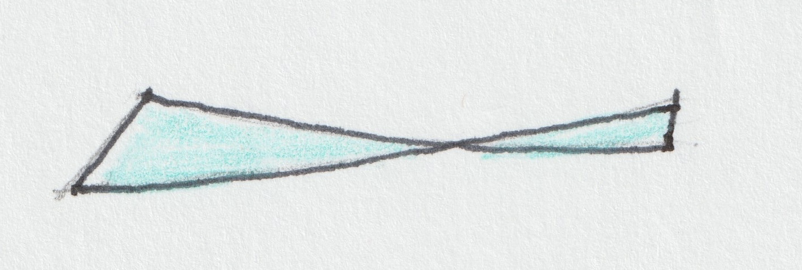
Try this: The lower 48 states are about 2,800 miles east-to-west. If you were to make an accurate three-dimensional model of North America with the U.S. measuring six feet across, the highest mountain on the continent, Mt. McKinley (3.85 miles above sea level), would be 1/10” tall. The thinnest known portion of the crust is about 4 miles thick: At this scale, that is, again, about 1/10” thick.
The continents have some tensile strength, rather like a drying paint film floating on a layer of solvent.
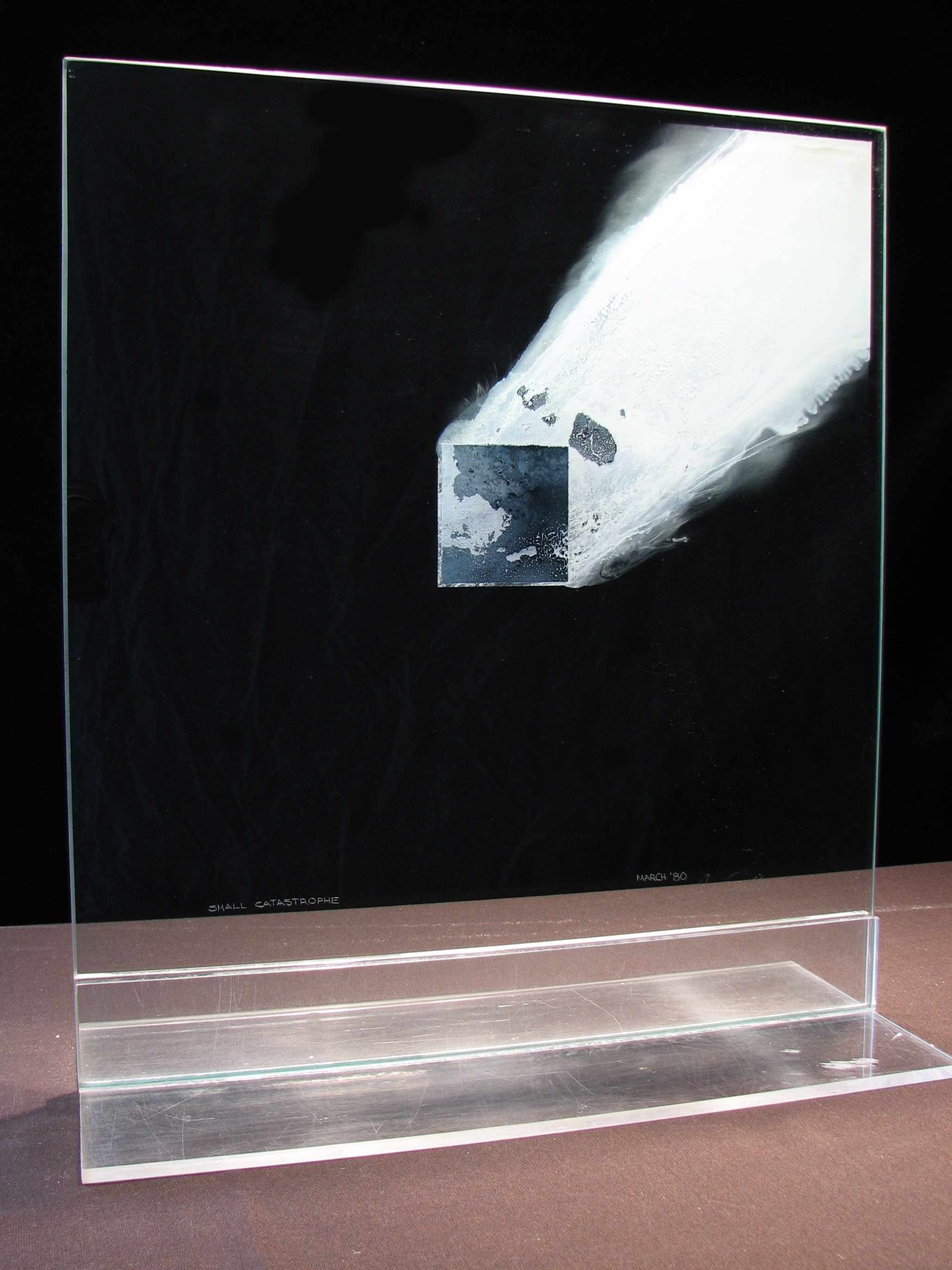
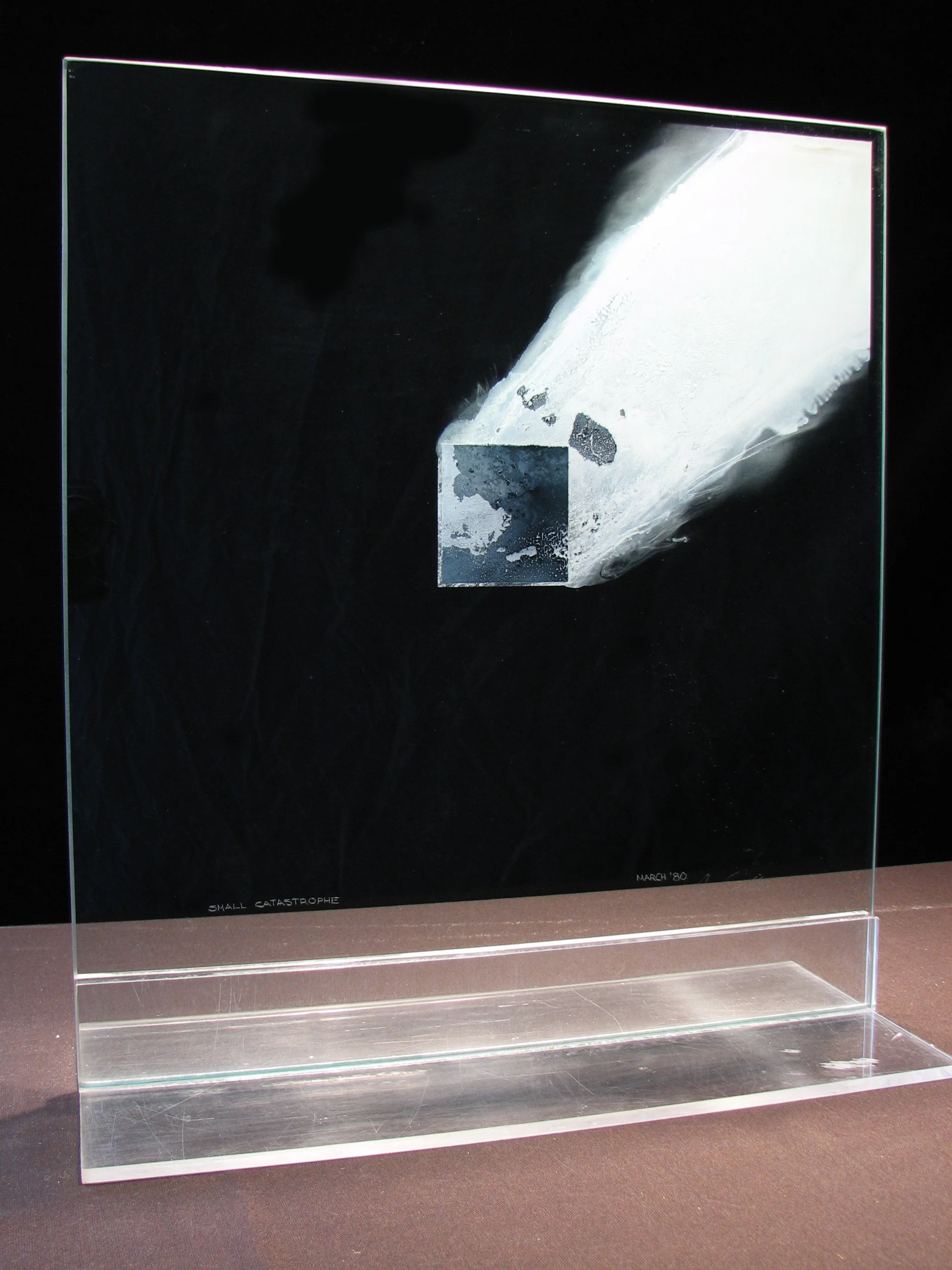
See “Small Catastrophe”, 18”x 16”x 1/4” plate glass, vitreous enamel glaze.